
Are we there yet? Taking stock of progress in minimizing pest risks through the sea-container pathway
Posted on Tue, 24 Mar 2026, 07:00
©FAO/Pier Paolo Cito
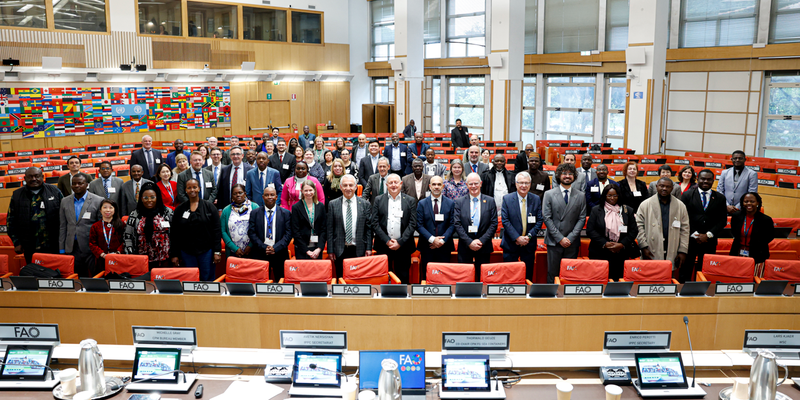
23 March 2026, Rome. To minimize the risk of pest spread associated with the sea-container pathway, delegates at the 20th Session of the Commission on Phytosanitary Measures (CPM-20) in Rome reaffirmed their commitment to supporting the CPM Focus Group on Sea Containers in strengthening collaboration with stakeholders to address potential threats. During the side session on Sea containers stocktake to shape CPM-21 recommendations, delegates emphasised the importance of increasing awareness and discussions on the long-term management of pest risks in this pathway. The side session was not only a good opportunity to enhance cooperation but a critical milestone in the work of the Focus Group, which is expected to present its final recommendations on the topic to CPM-21 in 2027.
Over 100 delegates attended the side session, including representatives of IPPC contracting parties, the shipping and freight industry and international organizations. They reviewed and evaluated the global progress of the Focus Group in identifying measures aimed at reducing the pest risks associated with the sea-container pathway and provided input to shape Focus Group’s recommendations to CPM next year. In particular, participants offered valuable inputs on uptake and implementation of CPM Recommendation on Minimizing the pest risk associated with the sea-container pathway (R-06), adopted by CPM in 2024.
“The sea-container pathway remains a critical issue of global phytosanitary significance. Managing the pest risks associated with it is a complex challenge”, said Enrico Perotti, IPPC Secretary. He emphasised the importance of sustained and practical collaboration among industry, governments and international development partners to evaluate measures and ensure that solutions are scientifically sound, practical, achievable and supported by those meant to implement them.
©FAO/Pier Paolo Cito
Proposed measures and industry progress
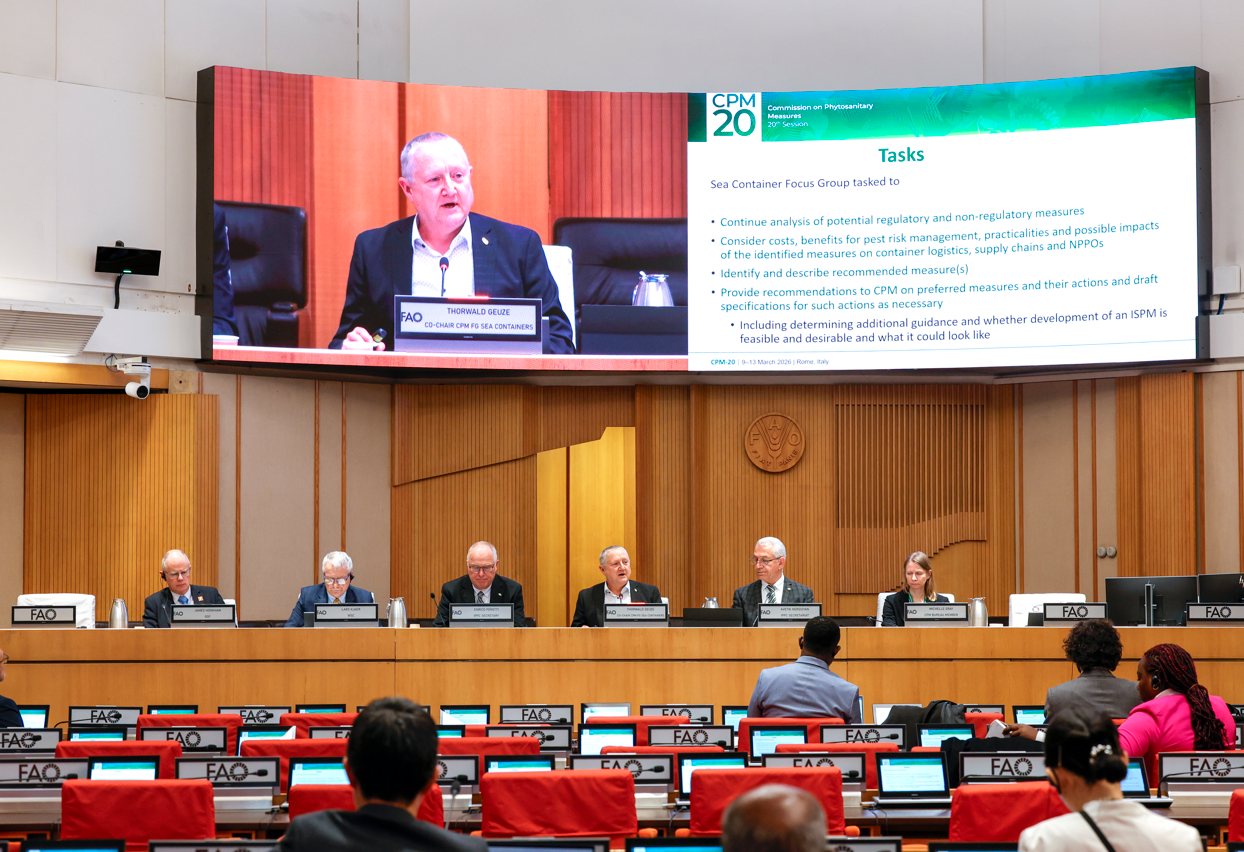
Thorwald Geuze, co-Chair of the Focus Group on Sea Containers, outlined the framework of regulatory and non-regulatory measures designed to reduce pest contamination in sea containers. The proposals, with short-, medium- and long-term measures, were selected for their feasibility, cost-effectiveness, capacity for global implementation, effectiveness in minimizing the pest risk and low impact on container logistics and supply chain. Together, they demonstrate a strategic commitment to highly practical solutions that facilitate trade while minimizing pest risks.
Key measures include:
- conducting awareness, education and outreach activities;
- promoting custodial responsibility for a cost-effective global supply chain;
- promoting adoption of the revised CTU Code (IMO-ILO-UNECE Code of Practice for packing of Cargo Transport Units), with provisions on cleanliness and reducing pest contamination;
- advocating for further improvements in sea-container design;
- approving third-party authorization to facilitate cost-effective implementation; and Exploring the development of an International Standard for Phytosanitary Measures (ISPM) to provide harmonised guidance to contracting parties.
Other presentations highlighted progress and actionable insights:
Lars Kjaer, World Shipping Council, presented on container design advancements and real-world trials, specifically highlighting collaborative efforts to redesign high-risk components (such as container floors and under structures) while balancing cost and weight optimization.
Michelle Gray, CPM Bureau member, guided participants in providing valuable inputs on the uptake and implementation of CPM Recommendation R-06; and
James Hookham of the Global Shippers Forum, reinforced the principles of custodial responsibility, highlighting it as a practical, collaborative approach to minimizing risk. He emphasized the ongoing dialogue to ensure that these principles are workable and embraced across the entire supply chain.
Next steps and call to action
Established by CPM-16 in 2022, the Focus Group on Sea Containers is mandated to review all existing relevant materials and recommendations, develop viable options to support phytosanitary risk management for sea containers and make recommendations to CPM. Looking ahead, the Focus Group will continue refining the current framework, define concrete implementation timelines and provide its final recommendations to CPM in 2027. Stakeholders are invited to submit any additional measures to possible inclusion in the framework to the IPPC Secretariat ([email protected]) by 15 April 2026. For additional information, please refer to the presentation available here.
Related information