
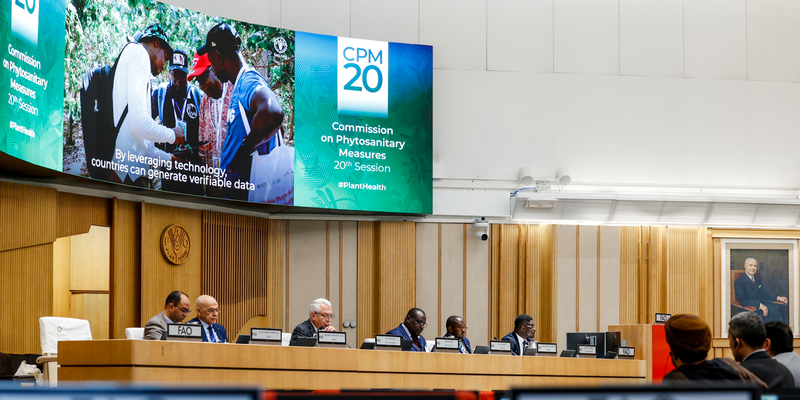
CPM-20 delegates highlight digital surveillance as key for early warning and market access in Africa
Posted on Thu, 19 Mar 2026, 07:14
©FAO/ Giuseppe Carotenuto
Rome, 18 March 2026 — Delegates at the 20th Session of the Commission on Phytosanitary Measures (CPM20) side session on the Africa Phytosanitary Programme (APP), underscored the importance of effective pest surveillance for timely, accurate and reliable data for early detection of pests and rapid response to outbreaks. The side session, chaired by Avetik Nersisyan, Lead of the Standards Setting Unit at the International Plant Protection Convention (IPPC) Secretariat, emphasised how surveillance goes beyond technical monitoring to serve as a strategic national tool that safeguards plant health, upholds international phytosanitary standards and enhances access to international markets.
Through APP, the IPPC is empowering African countries with cutting-edge digital and geospatial tools, mobile applications, training and harmonised pest survey protocols to boost surveillance of high-risk pest threats. APP, launched in 2023, is being implemented in 20 African countries, with funding from the European Union and the United Kingdom. Nineteen more countries have formally expressed interest in joining the next phase.
“APP shows that when one country conducts routine surveillance, uses innovative geospatial applications and detects pests early, the benefits extend across borders. This is why APP is transformational”, said Enrico Perotti, IPPC Secretary. He thanked the United States Department of Agriculture’s Animal and Plant Health Inspection Service (USDA APHIS) for initiating APP, the European Union and the United Kingdom for funding APP. He commended African countries for owning and investing in the programme, while inviting additional donors and contracting parties to provide support.
Saliou Niassy, Coordinator of the African Union Inter-African Phytosanitary Council (AU-IAPSC), said APP is helping countries “move from fragmented surveillance to coordinated digital systems; from paper-based reporting to real-time data; and from reactive response to early warning preparedness”, while strengthening multilateral cooperation, supporting evidence-based decision-making and reducing pest spread.
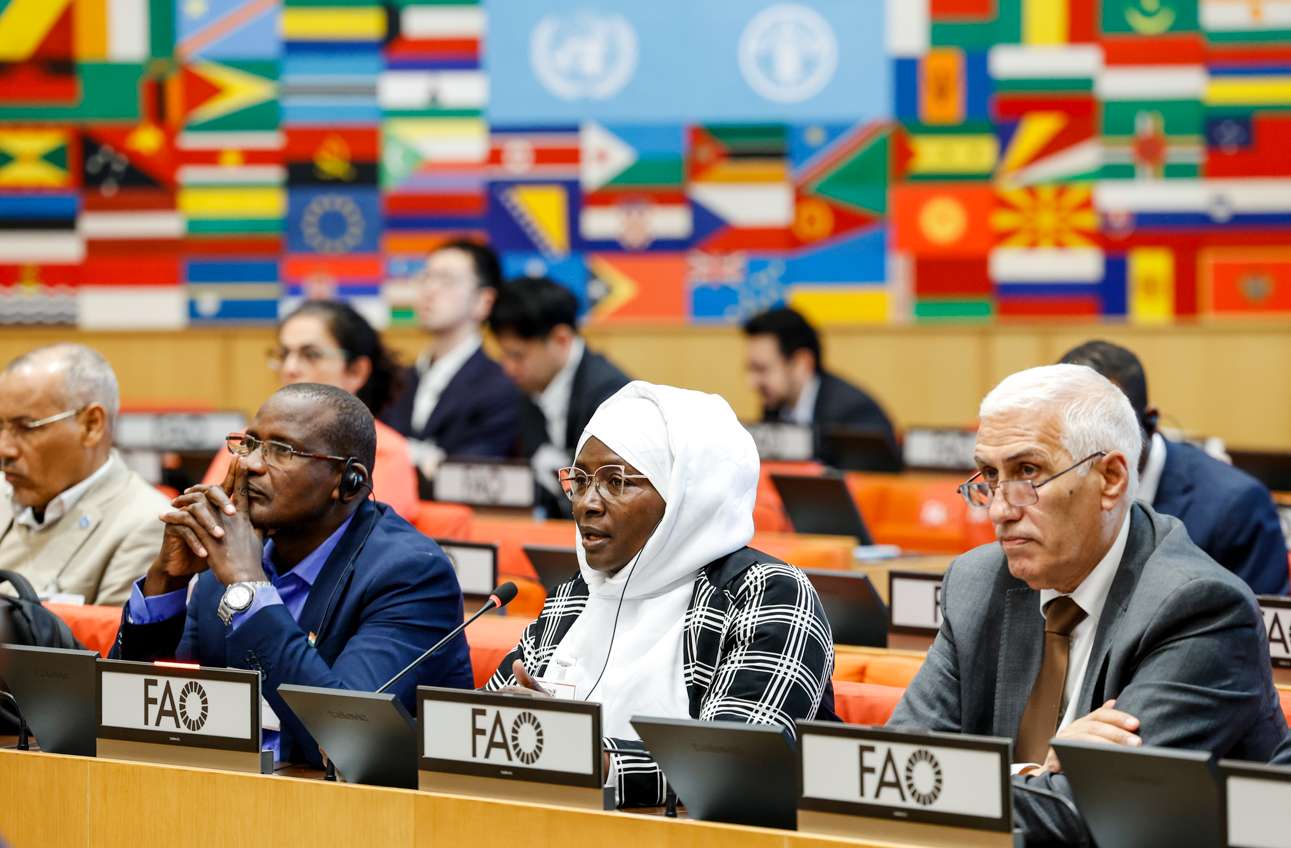 | 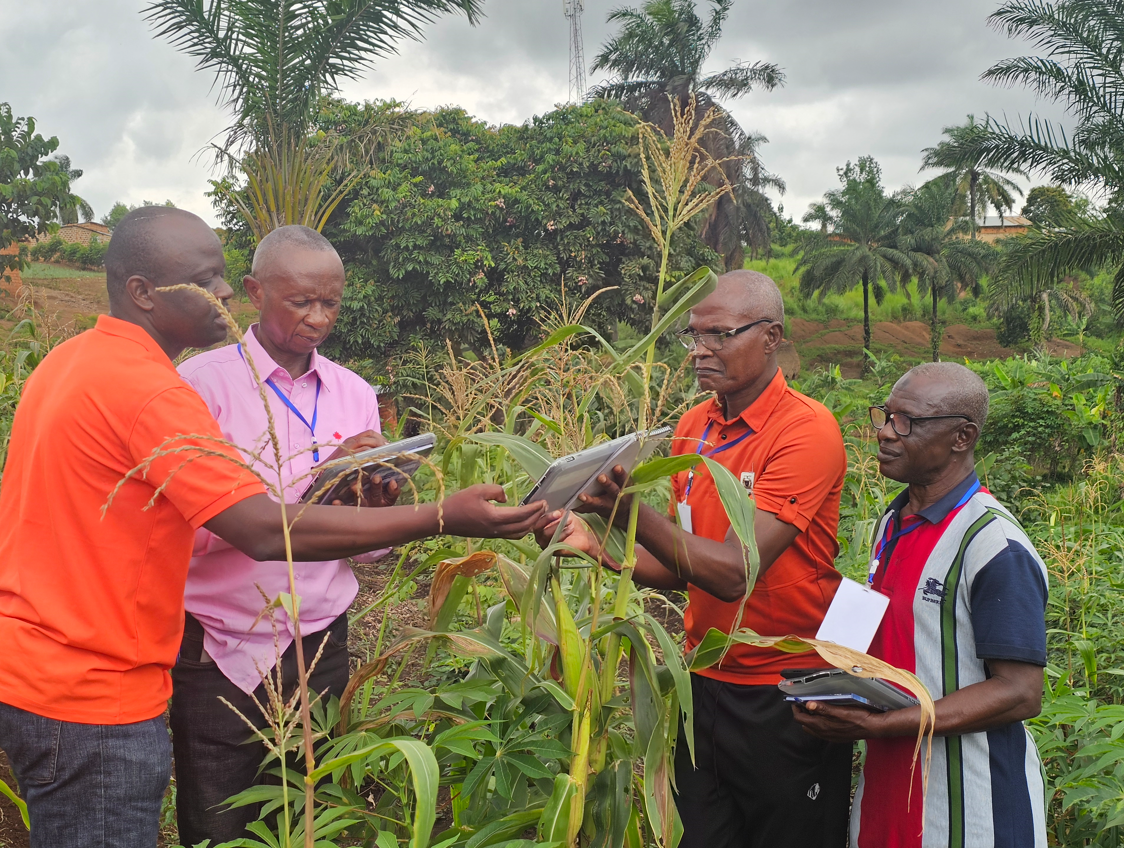 |
| ©FAO/ Giuseppe Carotenuto A CPM-20 delegate contributes to the discussion during the side session | ©FAO/ Descartes Koumba Phytosanitary inspectors use APP tools for field surveillance in the Democratic Republic of Congo |
Experiences from four APP implementing countries
Egypt: Islam Aboelela, from the national plant protection organization (NPPO) of Egypt showed how APP is boosting agricultural market access through stronger pest surveillance and data collection. Egypt has integrated APP into its national surveillance, trained over 100 plant health inspectors, aligned its national survey strategies with APP methodology, funded national activities and improved monitoring using IPPC-provided tablets. These advances have enabled Egypt to provide reliable pest status data for export certification, access new markets like New Zealand, enhance trade negotiations and demonstrate compliance with importers' requirements.
Halidou Mohomodou, from the NPPO of Mali highlighted APP's integration into Mali’s national programmes, alignment with state priorities, dedicated government funding and extensive training of over 120 phytosanitary inspectors. Equipped with tablets from the IPPC, drones and motorcycles, Mali now conducts real-time pest surveillance across 220 stations, targeting key threats such as Bactrocera dorsalis and Spodoptera frugiperda (Fall armyworm). Mohomodou affirmed Mali’s commitment to effective implementation of APP and echoed calls for greater technical and financial support to sustain the programme.
South Africa is using APP tools to strengthen its early warning systems for high-risk plant pests such as Xylella fastidiosa, while ensuring reliable production and sustained fruit exports. South Africa is using APP to strengthen its technical collaboration with other African countries, enabling shared learning, harmonized approaches and coordinated action against common plant pest threats, for greater regional resilience. South Africa has also expanded its surveillance network, improved data efficiency, simplified reporting, and trained 80 provincial staff, enabling nationwide data collection on seven priority pests. Yolanda Mthembu noted that South Africa has embedded APP in the NPPO’s strategic plan to ensure funding and coordination of surveillance activities.
Joab Tugume from the NPPO of Uganda, how APP is helping to overcome major phytosanitary challenges by strengthening pest surveillance, building a centralised pest survey database and improving technical capacity. Uganda has integrated APP into its national system and, for three consecutive years, used APP digital tools to conduct its annual Xylella fastidiosa national survey—advancing the country’s shift to real-time, digital monitoring that supports key export sectors such as flowers (USD 65.3 million market) and oil palm (USD 88.06 million market). APP also enables Uganda to generate survey maps, geo-referenced data and structured reports. Tugume recommended expanding the tools for pest risk analysis, horizon scanning and forecasting.
In closing, Mohamed Habib Ben Jamaa, Executive Director of the Near East and North Africa Plant Protection Organization (NEPPO), reiterated APP’s contribution to stronger phytosanitary systems in Africa. He called for broader regional participation and public-private partnerships to strengthen resilience against plant pest threats.
A new governance structure
CPM-20 also approved the Terms of Reference for a new 11-member APP Steering Group to provide strategic guidance in planning and monitoring the programme’s implementation and to support the IPPC Secretariat and participating countries in resource mobilisation for sustainability and a global scaling of APP. The steering group will work in collaboration with the existing APP Coordination, Technical and Communication working groups.
Related information