Do no harm: Plant health experts and leaders call for the safe provision of food and other humanitarian assistance
Posted on Thu, 26 Mar 2026, 07:48
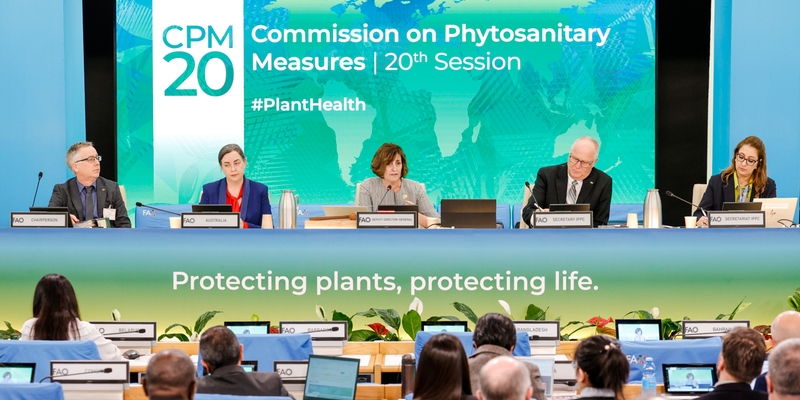
©FAO/Giuseppe Carotenuto
Rome, 25 March 2026 — As natural disasters and emergencies intensify worldwide, experts and delegates at the science session on Fostering plant health for safe provision of food and humanitarian aid, held during the Twentieth Session of the Commission on Phytosanitary Measures (CPM-20), stressed the importance of delivering humanitarian aid rapidly, while minimizing the risk of introducing plant pests that could further undermine fragile agricultural and environmental systems.
Delegates underscored the importance of awareness raising, capacity building and collaboration as principles to “do no harm” in the safe delivery of humanitarian aid that protects plant health and supports resilient agricultural and environmental systems.
“Safeguarding plant health is not just a technical issue but a humanitarian imperative. We cannot compromise quality for speed”, said Beth Bechdol, Deputy Director-General of the Food and Agriculture Organization of the United Nations (FAO). Highlighting the challenges in maintaining phytosanitary controls such as inspection during emergencies, she called on aid providers to adhere to basic, internationally recognised phytosanitary standards. Bechdol further expressed FAO’s commitment to this topic, considering that approximately 75-80 percent of the most vulnerable people requiring humanitarian assistance today are from the agricultural sector.
The Science session was organised by the CPM Focus Group on the Safe Provision of Food and Other Humanitarian Aid, established in 2021, following adoption of CPM Recommendation R-09 on the importance of shared responsibilities between donor and recipient countries. The Group's mandate concluded at CPM-20.
Sophie Peterson, the Focus Group Vice Chair, presented the key milestones and lessons learned, highlighting contributions from external organizations and the importance of supporting national plant protection organizations (NPPOs) in maintaining their regulatory functions during emergencies. She encouraged the use of the CPM Recommendation 09 as a catalyst for action at national and regional levels.
Since its establishment, the Group has also successfully revised Specification 77 on the development of a new International Standard for Phytosanitary Measures (ISPM), planned for public consultation in 2027. Peterson further underscored the need for a combination of tools, including an ISPM and greater awareness-raising, to address the threat of pest spread through humanitarian aid.
Real-world solutions to real-world emergencies
In his video message, Floyd Green, Minister of Agriculture, Fisheries and Mining of Jamaica, described Jamaica’s response to Hurricane Melissa in October 2025. He explained how rapid risk assessments, rapid categorization of plants and plant products based on their respective risk profiles and waivers for permit and inspection fees, enabled swift aid entry, yet never at the expense of phytosanitary integrity.
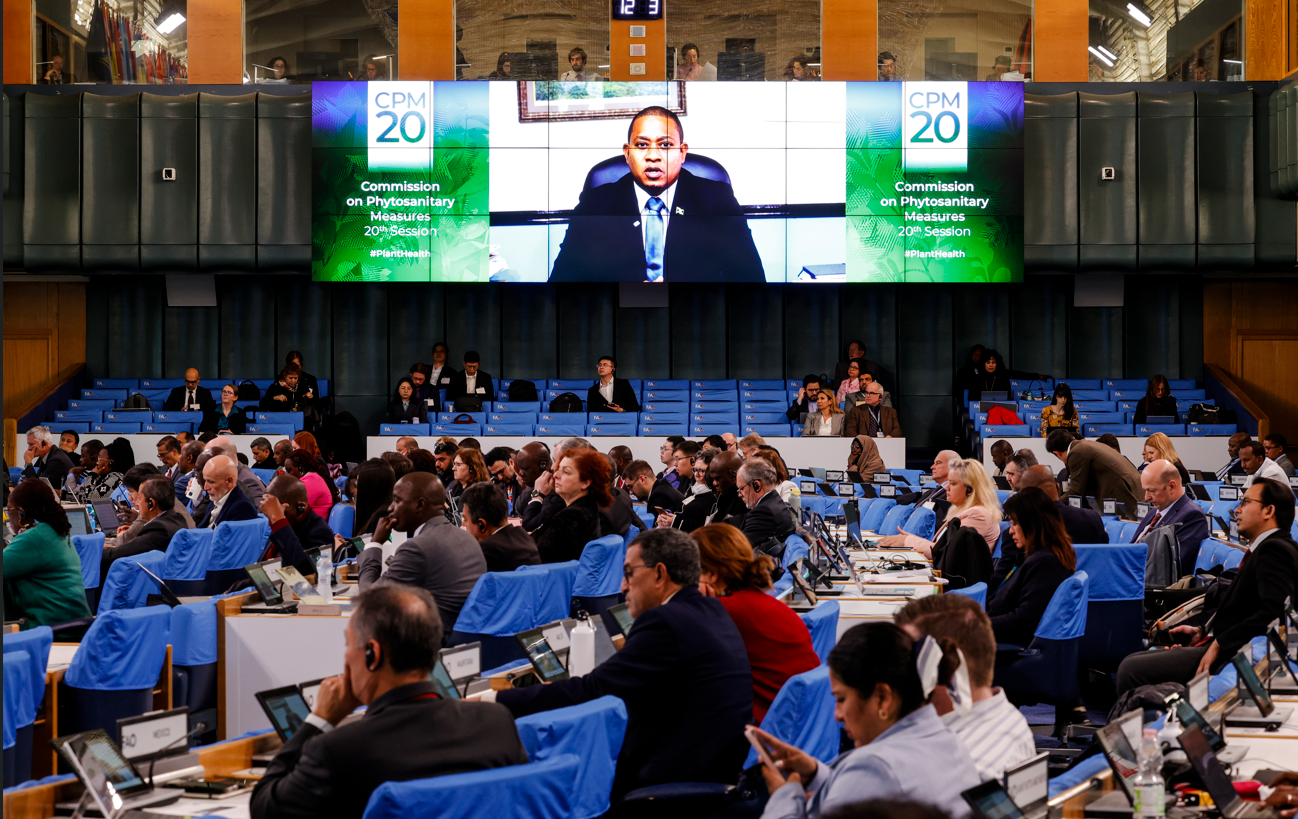
©FAO/Giuseppe Carotenuto Honourable Minister Floyd Green, Minister of Agriculture, Fisheries and Mining of Jamaica, delivers his message.
“Disaster response must never compromise biosecurity but rather reinforce the very structures that underpin national resilience”, he said.
“For Australia, this issue is about more than biosecurity. It is about partnership, stewardship, and standing by our region and the broader global community in ways that are safe, sustainable, and responsible”, said Julianne Cowley, Ambassador and Permanent Representative of Australia to FAO. She commended the IPPC community for developing tools to support contracting parties and stakeholders along the aid supply chain in minimizing the pest risk.
Luiza Munyua of the African Union Inter-African Phytosanitary Council presented the findings from a regional survey in Africa, in which several countries reported pests considered to have been associated with emergency aid, including the large grain borer (Prostephanus truncatus) in Kenya, Malawi and Zimbabwe.
From the Southwest Pacific region, Nitesh Datt, NPPO of Fiji, outlined key challenges such as short-notice arrivals, pressure to release aid with deferred phytosanitary checks and assessing pest risks from unmanaged waste. He called for clear procedures and close NPPO-humanitarian collaboration.
Juliet Goldsmith of the Caribbean Agriculture Health and Food Safety Agency reported cases of live tree frogs, mite-infested seedlings, contaminated grain and woodborer-infested pallets crossing borders through aid. She emphasized the need for pre-agreed emergency phytosanitary protocols, uncompromised traceability, post-entry surveillance and full NPPO integration in national and regional disaster management systems.
Affirmative action for safe aid
Acknowledging that any country could become an aid recipient, Marco Traa, Focus Group member from Europe, called for greater preparedness and awareness. In light of the unpredictable, fast-moving nature of emergency aid logistics, Traa outlined the complexities in determining ownership of humanitarian supplies.
From FAO, Sarah Cahill, Secretary of the Codex Alimentarius Commission- like IPPC, a global standard-setting body on the application of sanitary and phytosanitary measures, highlighted the link between food safety, humanitarian assistance and plant health. Ongoing Codex work to ensure food safety in emergencies focuses on setting maximum levels of aflatoxins in cereals, ensuring they are as low as reasonably achievable while maintaining access to adequate suppliers.
Furthermore, Elisabetta Tagliati from FAO’s Office of Emergency and Resilience presented plant health as a long-term resilience investment particularly in fragile and crisis-affected contexts, because it lowers long-term recovery costs. She highlighted the need to integrate gender considerations, especially since women play in vital roles in emergency agriculture in many countries.
Similarly, Shawn McGuire from FAO’s Plant Production and Protection Division, illustrated the benefits of effective seed assistance in emergencies —such as increased wheat yields in Afghanistan— while cautioning that poorly implemented seed aid can introduce plant pests and diseases and cause harm instead of offering assistance. In closing, Adriana Moreira from the IPPC Secretariat, urged contracting parties to view phytosanitary measures as “guardians of food security”, rather than as potential barriers to emergency assistance. She reiterated the need for humanitarian aid to save lives today without creating new agricultural and ecological crises tomorrow.
Related information