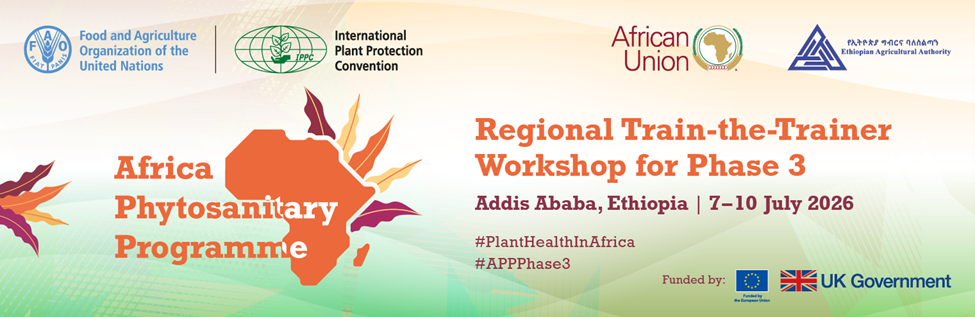
Regional Train-the-Trainer Workshop for Africa Phytosanitary Programme (APP) Phase 3
Agriculture contributes up to 30 percent of total economic value and provide livelihoods for more than 80 percent of the population. Yet, plant pests and diseases continue to take a heavy toll, destroying about 30-60 percent of crops annually, threatening food security, livelihoods and international trade.
Across the continent, countries are rising to meet this challenge by strengthening their national phytosanitary systems to protect plant health, agriculture, trade and the environment. One of these key initiatives is the Africa Phytosanitary Programme (APP), coordinated by the International Plant Protection Convention (IPPC) Secretriat.
APP also fosters regional cooperation and peer learning, bringing countries together to share experiences, strengthen coordination and build a stronger collective defense against plant pests.
What: Train-the-trainer workshop to launch APP Phase 3. The workshop will be hosted by the Government of Ethiopia through the Ethiopian Agricultural Authority, which is also Ethiopia’s national plant protection organization (NPPO).
When: 7-10 July 2026
Where: Addis Ababa, Ethiopia
Why: Building on the pilot and second phase, with 20 participating countries, the workshop will introduce plant health officers from an additional 18 African countries to the programme and support their implementation of better surveillance.
APP supports African countries to enhance effective pest surveillance, early detection, accurate diagnostics and timely response tthrough specialized training of phytosanitary personnel, harmonized survey protocols and cutting-edge digital tools with advanced data collection and analysis applications.
APP is helping to accelerate the shift from paper-based systems to digital field data collection. With more reliable, geo-referenced data and accurate pest information, countries can secure better foreign market access for agricultural products, improve compliance with international standards, and boost rapid pest detection, effective, coordinated response and recovery from high-risk plant pests.
Who should attend: Phytosanitary personnel (surveillance inspectors + national GIS experts) nominated by their respective national plant protection organizations of countries participating in APP Phase 3: Botswana, Burkina Faso, Central African Republic, Comoros, Cote d’Ivoire, Djibouti, Libya, Eswatini, Ethiopia, Gabon, Mauritania, Mozambique, Niger, Nigeria, Namibia, Sao Tome and Principe, Sudan, Togo and observers from Yemen.
Other participants will include FAO plant health officers, representatives of selected APP countries of phase 1 and 2; representatives of Africa’s regional plant protection organizations (AU-IAPSC and NEPPO); representatives of APP Working Groups and IPPC Secretariat staff.
Learning by doing: A field visit to a commercial farm in Ethiopia’s Oromia Region will enable participants to use APP digital tools for real time phytosanitary data collection, while gaining hands-on experience in pest surveillance, inspection, and data management to support national implementation and cascade training.
Learning outcomes
By the end of the training, participants will be able to:
-
Use harmonized survey protocols and diagnostic principles to correctly identify and analyze plant pests such as Bactrocera spp., Rhynchophorus ferrugineus (Red palm weevil) and Fusarium oxysporum f.sp. cubense TR4, which countries in Phase 3 outlined as high-priority risks.
-
Use APP mobile applications and the APP GIS Hub for field data collection, management, visualization, and reporting.
-
Design, plan and deliver national training workshops tailored to country priorities, using APP ToT methodologies to transfer knowledge and APP digital tools and applications to strengthen national pest surveillance and reporting capacity.
-
Develop National Action Plans with budgets, implementation timelines, and monitoring and evaluation frameworks.
-
Practice field operations (trap setting, scouting, identification, sampling, biosecurity) and translate results into maps and dashboards to support action.
Language: The workshop will be conducted in English, and interpretation will be provided in Arabic and French.
Collaborators and partners:
-
Food and Agriculture Organization of the United Nations (FAO) Regional Office for Africa (RAF)
-
African Union Inter-African Phytosanitary Council (AU-IAPSC)
-
Near East and North Africa Plant Protection Organization (NEPPO)
-
European Commission
-
Government of the United Kingdom of Great Britain and Northern Ireland
Attending the workshop: The IPPC Secretariat will provide logistical and travel support for all national participants nominated by their countries and invited participants, based on IPPC Funding Criteria.
For more information, please contact: [email protected]; [email protected]; [email protected]; [email protected]
Provisional agenda: here
Speakers:
 |
His Excellency Addisu Arega Kitessa Minister for Agriculture, Ethiopia H.E. Addisu Arega Kitessa is a senior politician with past leadership roles at both federal and regional levels in Ethiopia. His experience includes coordinating rural development programmes, working in the Government Communications Affairs Office, and serving as Coordinator of the Oromia Regional State Rural Cluster. |
 |
Saliou Niassy Coordinator, African Union Inter-African Phytosanitary Council (AU-IAPSC)Saliou is a plant health scientist and entomologist with extensive experience in agricultural research, pest management, and phytosanitary systems in Africa. At AU IAPSC, he leads efforts to strengthen plant health regulations, phytosanitary capacity, and safe trade across the continent. His work focuses on integrated pest and plant health management, sustainable agriculture, and biodiversity conservation. Before joining the African Union, he held leadership roles in research and technology transfer at the International Centre of Insect Physiology and Ecology (icipe) and has contributed to over 200 scientific publications on topics including integrated pest management, climate change impacts on agriculture, and sustainable crop protection. |
 |
Mohamed Habib Ben Jamâa Executive Director of the Near East and North Africa Plant Protection Organization (NEPPO) Ben Jamâa has more than 30 years of experience in plant protection and has been heading the NEPPO since 2023. Prior to that, he led the national plant protection organization (NPPO) of Tunisia (DGSVCIA) for six years. He is a full Professor and researcher in plant protection (Entomology) at the National Institute for Research in Rural Engineering, Water and Forests (INRGREF). |
 |
Enrico Perotti Secretary, International Plant Protection Convention (IPPC)Enrico is an internationally recognized leader in plant health, biosecurity and agricultural policy, with over 30 years of experience spanning government, academia, and the private sector. At the IPPC Secretariat, he leads efforts to protect plant resources, facilitate safe trade, strengthen international cooperation and integrate scientific innovation, digital tools and capacity development to enhance global phytosanitary frameworks. Enrico has held senior roles, including leadership of the biosecurity risk assessment team at New Zealand’s Ministry for Primary Industries and key positions within the Australian Public Service focused on biosecurity policy and emergency response. He also helped advance Australia’s trade and market access as Australia’s first Agriculture Counsellor to Malaysia and Brunei. |
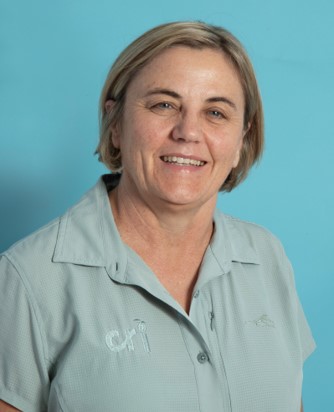 |
Elma Carstens Phytosanitary and Biosecurity Specialist at Citrus Research InternationalElma has expertise in plant pathology and extensive experience in enabling the safe trade of agricultural products through regulatory compliance. She plays a key role in translating scientific research into practical phytosanitary and biosecurity measures that support market access and plant health. Elma holds a PhD in Plant Pathology from Stellenbosch University. |
 |
Avetik Nersisyan Standard Setting Unit Leader and APP Coordinator, IPPC SecretariatAn agronomist with about three decades of experience, Avetik coordinates standard-setting activities of the IPPC Standards Committee, technical panels and expert working groups. As the Unit Leader, he provides substantial input to preparations for sessions of the Commission on Phytosanitary Measures (CPM), the Strategic Planning Group, the CPM Bureau, and other ad hoc meetings. Before joining the IPPC, he managed the implementation of the Food and Agriculture Organization of the United Nations (FAO)’s Strategic Programme Two (SP2) in the FAO Regional Office for Europe and Central Asia. SP2 focuses on making agriculture, forestry, and fisheries more productive and sustainable. Previously, he was also alternative FAO Representative for Moldova, FAO Technical Officer for Plant Production and Protection in the region and Assistant FAO Representative in Armenia. |
 |
Descartes Koumba Mouendou Standard Setting Officer and Deputy Lead, Standards Setting Unit (SSU), IPPC Secretariat Descartes supports the development of international phytosanitary standards by providing technical and organizational guidance to the Standards Committee (SC) and coordinating the SC 7. He also coordinates support to key IPPC technical bodies, including the Technical Panel on Phytosanitary Treatments, the Technical Panel on the Glossary and the Expert Working Group (EWG) responsible for revising ISPM 12 – Phytosanitary Certificates (2023 020). Descartes also supports the Commission on Phytosanitary Measures (CPM) Focus Group on Sea Containers, provides technical assistance to the Africa Phytosanitary Programme (APP), and coordinates the IPPC Regional Workshop for Africa. Before joining the Standards Setting Unit, he spent six years in the Implementation and Facilitation Unit (IFU), where he coordinated the Implementation and Capacity Development Committee (IC), managed IPPC Observatory surveys and supported dispute avoidance, implementation materials and cross unit collaboration. He previously worked with the Ministry of Agriculture of Gabon and the FAO Subregional Office for Central Africa. Descartes has a Master’s in Environmental Management and an Engineer’s degree in Plant Protection and Production. He speaks English and French fluently. |
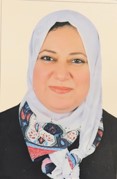 |
Heba Kassab Market Access Unit Supervisor, Central Administration of Plant Quarantine (CAPQ), NPPO of Egypt Heba holds a Bachelor of Agriculture in International Agriculture from Cairo University, a Master of Business Administration (MBA), and a Master of Professional Plant Quarantine. She is a distinguished phytosanitary expert and a member of the IPPC's Commission on Phytosanitary Measures (CPM) Focus Group on Plant Health in the Context of One Health, where she actively collaborates with national plant protection organisations (NPPOs) to promote sustainable plant health and robust trade facilitation frameworks. With over 20 years of experience in agricultural trade and international quarantine regulations, she specializes in bilateral trade negotiations, electronic phytosanitary certification and pest risk assessments. Throughout her career, she has successfully managed global trade files for major global markets such as the European Union, Canada, Australia and New Zealand, audited export facilities and aligned plant health standards to facilitate safe, compliant international trade. She has managed critical trade files. Her expertise includes conducting Pest Risk Assessments (PRA), implementing WTO-SPS agreements, auditing export-certified packing houses and driving digital transformation through electronic phytosanitary certification systems (such as TRACES). She has trained over 150 plant quarantine inspectors to improve regulatory compliance and modern certification standards. |
 |
Adama Malle Head of the Surveillance, Alert and Intervention Division, National Plant Protection Office (NPPO), Mali Adama is an Agricultural and Rural Engineering professional with 20 years of experience in plant protection, integrated pest management, early warning systems, and coordination of plant protection interventions. He is also the digital focal point for the African Phytosanitary Programme (APP) in Mali and an APP master trainer. Ingénieur de l’Agriculture et du Génie Rural, spécialiste en protection des végétaux avec 20 ans d’expérience. Actuellement chef de Division Surveillance, Alerte et Intervention à l’ONPV du Mali, Point focal numérique du Programme Phytosanitaire Africain (PPA) au Mali, Expert en gestions intégrée des bioagresseurs, systèmes d’alerte précoce et coordination des interventions phytosanitaires. Bénéficiaire de 3 formations des formateurs du programme phytosanitaire africain (PPA). |
 |
Joab Tugume Katarimpika Senior Agricultural Inspector and Head, Plant Quarantine Unit, Ministry of Agriculture, Animal Industry and Fisheries, UgandaJoab is an agricultural professional with over 15 years of experience working in the agricultural sector, particularly in the phytosanitary space. At the Ministry of Agriculture, Animal Industry and Fisheries, he heads the unit that coordinates national pest surveillance, pest risk analysis and plant import regulation. He has a PhD in Agriculture (Plant Pathology) and a Master of Science in Crop Science (Crop Protection) and is finalizing a Master of Business Administration. Joab is a Member of the East African Community (EAC)'s Technical Working Group on Pest Risk Analysis and is the APP focal point for Uganda. |
 |
Yolanda Mthembu Scientist, Department of Agriculture (National plant protection organization of South Africa)Yolanda is a SACNASP-registered Professional Natural Scientist with over 19 years of experience in biosecurity and plant health. At the Department of Agriculture, she leads the management of national plant pest surveillance networks and the development of early warning systems for invasive agricultural pests. Yolanda is a specialist in risk assessment and plant pest surveillance, with a particular focus on integrating technological innovations into biosecurity. She is adept at leveraging ArcGIS and ArcView software to manage surveillance data and plan risk-based sites, ensuring data-driven precision in detecting invasive agricultural pests. She has a Bachelor of Science in Plant Pathology and Microbiology from the University of KwaZulu-Natal and advanced training in Pest Risk Analysis from the National Institute of Plant Health Management in India. |
 |
Stefano Preti Phytosanitary Standard Setting Specialist, IPPC SecretariatStefano supports activities of the Africa Phytosanitary Programme and the work of IPPC Technical Panels and Expert Working Groups. He is a plant health specialist with an MSc in International Horticultural Science and experience across regional, national, and European institutions. Stefano previously worked as a Plant Health Inspector for the Italian National Plant Protection Organization, where he was responsible for implementing regional plant health management activities. |
 |
Dr Sandrine M. Bayendi Loudit Dr Sandrine M. Bayendi Loudit, epse Essono, is an agronomist-entomologist with over 20 years' experience in crop protection. She specialises in research on plant health and agricultural sustainability in Africa. Since April 2022, she has served as a Senior Scientific Officer in Entomology at the Inter-African Phytosanitary Council of the African Union (AU-IAPSC), which is part of the Department of Agriculture and Rural Development of the African Union Commission. Dr Sandrine M. Bayendi Loudit, epse Essono, holds a PhD in Agronomic Sciences and Biological Engineering (2017) and a Master's degree in the Protection of Tropical and Subtropical Crops (2011), both from the University of Liège-Gembloux Agro Bio Tech in Belgium. Prior to her role at AU-IAPSC, she worked at the Institute of Agronomic and Forestry Research (IRAF) in Gabon from 2006 to 2022. During her time there, she managed programmes and projects related to plant health, first as a Plant Protection Laboratory Manager and later as the Manager of the Plant Protection Programme, with a focus on pesticide management. She is fluent in both French and English, enabling her to communicate and collaborate effectively in diverse environments. |
 |
Mohamed El Hady Sidatt Plant Production and Protection Officer, Food and Agriculture Organization of the United Nations (FAO) Sub-regional Office for North AfricaSidatt leads plant production and protection activities to support crop production and control of plant pests and diseases. He has previously worked as an agricultural officer at the FAO-based Rotterdam Convention secretariat, where he trained national authorities in several Arab and African countries on implementing the Rotterdam Convention. He also supported programmes for monitoring and evaluating the effects of pesticides on human health and the environment. |
 |
Alessandra Falcucci GIS Specialist, Food and Agriculture Organization of the United Nations (FAO)Alessandra works in geospatial analysis and environmental modelling, applying GIS tools to support data-driven projects. At FAO, she contributed to the spatial component of the Global Livestock Environmental Assessment Model and to early warning models for Rift Valley fever and avian influenza. She provides training in QGIS and has been a tutor for the Master in Conservation Biology at Sapienza University of Rome. Alessandra has a PhD in Natural Resources from the University of Idaho (USA), focusing on habitat suitability modelling for wolves and bears in the Alpine and Apennine ranges. She has authored several peer-reviewed scientific publications and earned certificates in GIS and statistics during her PhD. |
|
|
Samira Faris |
 |
Georg Goergen Head, Biodiversity Centre and Biological Control Centre for Africa, International Institute of Tropical Agriculture (IITA)Georg has broad expertise in integrated pest management, habitat management, biosystematics, insect biodiversity, and biological control of major agricultural pests in tropical Africa. Over many years, he has provided taxonomic and biosystematics support to IITA and its national and international partners, helping to strengthen institutional capacity for the identification and study of arthropods of agricultural importance. He has also played a significant role in developing one of the largest insect reference collections in West Africa. As a research entomologist, Georg has extensive knowledge of the entomofauna of tropical Africa and was the first to detect several invasive insect species newly introduced to sub-Saharan Africa. He collaborates widely with entomologists, taxonomists, and biological control specialists from international research centers, including WorldVeg, icipe, AfricaRice, and universities worldwide. He has served as principal investigator on numerous successful biological control projects, contributing to sustainable crop protection, biodiversity conservation, and improved agricultural resilience across the region. |
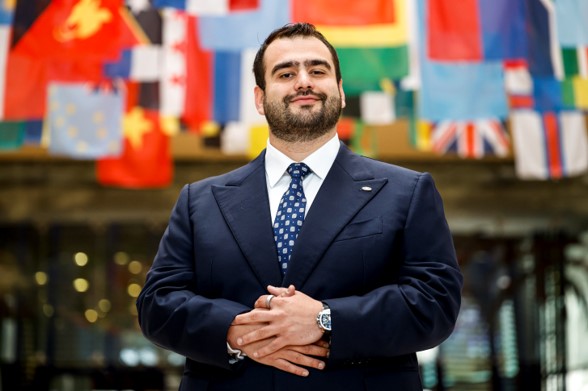 |
Levon Rukavishnikov IPPC Programme Specialist Africa Phytosanitary Programme (APP) Levon Rukavishnikov works in programme support, operations and programme finance, with experience spanning international organisations and private-sector management and operations. At the IPPC Secretariat, he supports the delivery of activities related to the Africa Phytosanitary Programme and IPPC standard-setting work. His work includes monitoring, financial reporting, implementation follow-up, procurement and logistics coordination, resource mobilisation, administrative processes, meeting and workshop organisation, and the preparation of technical and donor-facing materials. Before joining the secretariat, Levon held management and operations roles at Premium Line Central Asia and 1188 Ideal Water, working in spanning supply chain management, account management, supplier relations, financial and project-related responsibilities, and operational delivery. He has postgraduate degrees in financial management and sustainability and circular bio-economy, and a bachelor’s degree in business administration. |
 |
Camilo Beltrán Montoya Agricultural Officer, IPPC Secretariat Camilo coordinates activities related to Pest Outbreak Alert and Response Systems (POARS), National Reporting Obligations (NROs), and Phytosanitary Capacity Evaluations (PCEs). With more than 15 years of experience in plant health, phytosanitary systems, and international cooperation, he has supported national, regional, and international initiatives in areas including pest surveillance, diagnostics, emergency preparedness, pest risk management, phytosanitary capacity development, and pesticide registration. He has facilitated PCEs in several countries and coordinated projects aimed at strengthening phytosanitary systems and institutional capacities across multiple regions. |