SPOTLIGHT: Getting ahead of emerging plant pests of global concern: How the Pest Outbreak and Alert Response System is taking shape
Posted on جمعة, 13 فبراير 2026, 09:05
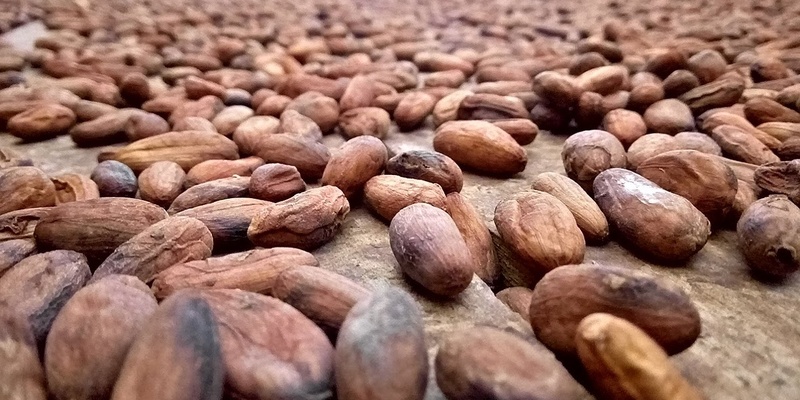
Cocoa beans prepared for processing at a small-scale facility in Caballococha, Peru. Cocoa is among the crops affected by Rhizoctonia theobromae, an emerging pest of global concern according to the IPPC. ©FAO/ Camilo BeltranMontoya
Plant pests do not respect borders. In recent years, a growing number of pests have begun spreading faster and farther, affecting crops, ecosystems and livelihoods across regions and in some cases posing risks of global concern. Often, by the time a new pest is recognized as a serious threat in one country, it is already appearing elsewhere.
To respond to this challenge, countries, through the International Plant Protection Convention (IPPC), established the Pest Outbreak Alert and Response System (POARS), - strengthening early warning and coordinated action on emerging plant pests of global concern.
According to Panagiota Mylona, POARS Steering Group Chair and Policy Officer at the European Commission’s Directorate-General for Health and Food Safety (DG SANTE), POARS was created for identifying pests that are truly “on the move” and whose spread and impacts could extend beyond a single country or region.
“POARS is designed as an early warning system for national plant protection organizations, providing means for faster and more coordinated responses to emerging pests that are identified as being of global concern,” she said. It focuses on a critical question: which emerging pests genuinely require early, coordinated global attention? Not every pest meets this threshold. POARS therefore applies a structured, evidence-based assessment to distinguish emerging global threats from pests that, while serious, may be better addressed through existing mechanisms.
Lessons from the 2025 assessments
According to Panagiota, the response to the first POARS call for emerging pests in 2025 demonstrated interest and engagement from countries. The high number of pest nominations and the rapid, constructive responses from national plant protection organizations (NPPOs) during the assessment process showed a clear demand for this type of global coordination. |
 Panagiota Mylona, Chair of the POARS Steering Group and Policy Officer at the European Commission’s Directorate-General for Health and Food Safety (DG SANTE). Courtesy photo. |
In such cases, early warning becomes critical. POARS supports this through the issuance of IPPC Pest Alerts, which translate horizon scanning findings, official reports into actionable, timely intelligence for countries. NPPOs are urged to monitor these alerts, consider integrating them into national surveillance, and pest mitigation strategies.
Rhizoctonia theobromae— a fungal pathogen —has been reported affecting additional crops such as cassava beyond those previously known as cacao. Evidence also suggests movement across continents, from Asia to the Americas. Panagiota emphasizes acting early while evidence is still being consolidated.
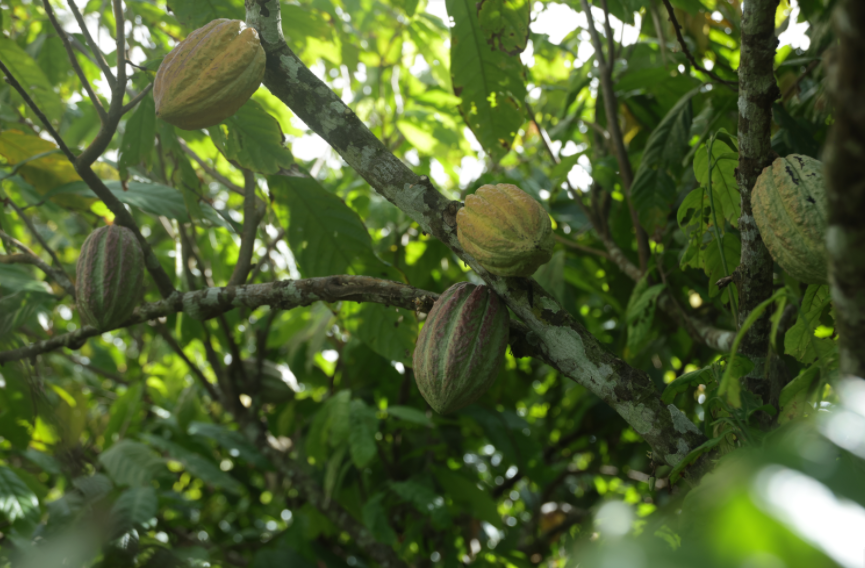
©FAO/ Meraz Parker-Potoi
Within a year of its nomination, during the POARS pilot phase, the first POARS Expert Working Group was established with leading specialists from around the world. This early progress shows how the system is beginning to translate identification into concrete support.
The case of Orobanche cumana or sunflower broomrape, is another good example where the evidence enabled a straightforward evaluation. The impact of this parasitic weed on sunflower cultivation is well documented. With recent findings in the Americas, the continental jump from its native range in Asia to South America was evident Additionally, due to its capacity for dispersion and mutagenesis, more evidence of re-emergence is appearing in areas where it is known to occur.
In some cases, uncertainty has made evaluation difficult. For some pest assessments, recent evidence of active spread was missing. In other cases, pathways of introduction beyond natural spread were unclear, or the potential impact in new areas could not be confidently assessed.
A transparent and structured approach
As Chair of the POARS Steering Group, Panagiota led the identification and application of a clearly defined, three-step assessment framework to ensure transparency and comparability across evaluations.
Firstly, POARS examines distribution and spread. There must be credible evidence of a pest’s recent geographical expansion beyond local spread, such as movement into new countries or distant regions, while still having a limited distribution in areas where it could establish. This ensures that POARS focuses on pests that are both “on the move” and still amenable to early action.
Secondly, POARS assesses current impacts. The evaluation considers whether the pest is already causing substantial economic or environmental impacts, including direct losses, control costs, trade implications or ecosystem disruptions. At least one of these impact criteria must be met for the assessment to proceed.
Finally, POARS evaluates future risk by examining the likelihood of further spread, the potential scale of impact in new areas, and whether the pest would be difficult to manage if it were established. This considers pathways, host distribution, and availability of effective control measures. These three steps ensure that POARS remains selective and evidence-based, focusing on pest outbreaks where early, coordinated global attention can make a meaningful difference.
“POARS is not intended to undermine the importance of pests that are critical at national or regional levels, nor to create unnecessary disruption to trade. Its focus is on evidence and early coordination” the Chair stresses.
Building a robust system and inviting engagement
The current POARS Steering Group was established in March 2023 for an initial two-year period to design, pilot and operationalize POARS. Progress made in this concluding first phase is now informing the next stage of POARS’ development. A new Steering Group will be established to continue this work in the coming three years, further strengthening the system’s ability to support countries in addressing emerging plant pest risks. As such, the IPPC Secretariat launched a call for experts (deadline 15 February 2026) to join the POARS Steering Group.
Looking ahead
POARS will continue consolidating its role as a reliable mechanism that identifies pests of global concern, tracks their movement around the world, and enables timely support for NPPOs, to enhance pest prevention and strengthen outbreak preparedness and response.
Additionally, stronger networking and collaboration among national and regional plant protection organizations will enable countries to share evidence, align approaches for timely response.
“Emergencies can happen at any time. We need people who can engage quickly, contribute across regions, and are open to refining working methods as we learn from implementation,” Panagiota said.
She encourages experts worldwide to respond to the call and contribute to this work. “We need flexible and dedicated members willing to work across regions, engage at short notice, and remain open to learning new tools while building on existing ones — all in support of a robust system that can respond to emergencies.”
Information generated through POARS, including the outcomes of emerging pest assessments, criteria, and released alerts, is made available through dedicated POARS pages on the IPPC website. Official pest reporting, one of the National Reporting Obligations (NROs), is fundamental to POARS, providing country-verified information. Further guidance on NROs is available through the IPPC Plant Health Campus.
Subscribe
Subscribe to the IPPC Newsletter
النشرة الإخبارية للاتفاقية الدولية لوقاية النباتات
اشترك لتلقي آخر news from the IPPC in your inbox.
Subscribe