
SPOTLIGHT: Building resilient phytosanitary systems in Africa
Posted on أربعاء, 18 فبراير 2026, 13:48
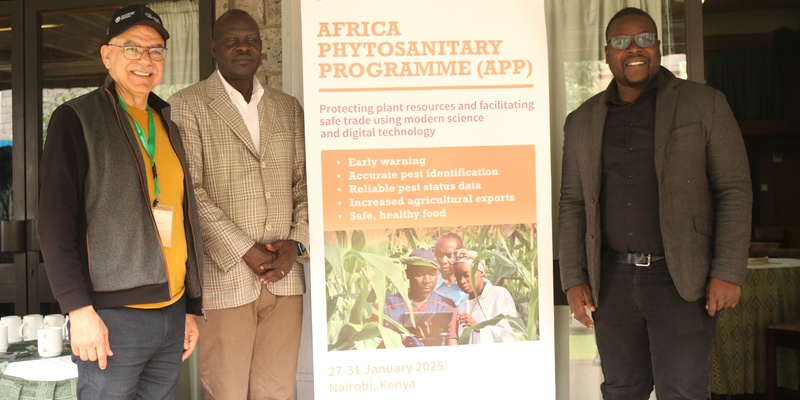
(L-R): Mohamed Habib Ben Jamaa- NEPPO, Arop Deng- Former APP Coordinator at the IPPC Secretariat and Saliou Niassy- AU-IAPSC during an APP training workshop in January 2025 in Nairobi, Kenya ©KEPHIS
In this month’s spotlight interview, Saliou Niassy, Coordinator of the African Union Inter-African Phytosanitary Council (AU-IAPSC) and Mohamed Habib Ben Jamaa, Executive Director of the Near East and North Africa Plant Protection Organization (NEPPO), discuss strengthening plant pest surveillance and prevention through the IPPC’s Africa Phytosanitary Programme (APP).
Agriculture contributes 15-30 percent of Africa’s GDP and employs over 80 percent of the population, yet the continent loses 30-60 percent of its crops annually to plant pests and diseases, threatening food insecurity and trade. What is the extent of the pest problem in Africa?
Ben Jamma: The plant pest problem in Africa is extensive, causing massive crop losses and significant economic damage, threatening food security. Invasive species like Fall Armyworm, Xylella fastidiosa, Red Palm Weevil and fruit flies devastate staple and horticultural crops, leading to hundreds of millions in losses and impacting exports. Despite its vast potential, Africa's agriculture is dominated by smallholders, subsistence farming, and reliance on traditional methods, making it vulnerable to weather and limiting its productivity.
What inspired the African Union’s support for APP and drives its ongoing commitment to strengthening plant health?
Saliou: APP represents a practical extension of efforts to strengthen Africa’s phytosanitary systems, making AU-IAPSC a natural stakeholder. Our role is to guide, advise, train and represent African member states. APP directly supports this by helping countries build effective monitoring and surveillance systems for priority pests affecting key commodities. Such systems are essential because, without early warning and risk assessment, countries cannot adequately evaluate risks or mitigate threats. This makes APP closely aligned with AU-IAPSC’s 15-year plant health strategy. This strategy contributes to broader continental frameworks such as the Comprehensive Africa Agriculture Development Programme (CAADP) and the African Union Agenda 2063.
Why is it important to build Africa’s phytosanitary capacity, particularly in pest surveillance, detection and reporting?
Ben Jamaa: Pest monitoring is the core of control measures by involving systematic and regular inspections to identify pest species; evaluate population levels (outbreak); estimate damage and take targeted control action. In fact, early detection acts as a warning system to prevent pest outbreaks.
Saliou:Africa’s phytosanitary system is vulnerable to frequent devastating pest invasions, which thrive in Africa’s favourable climate and diverse vegetation. It is essential to strengthen national systems—through effective monitoring, technical pest surveillance teams and better understanding and application of the International Standards for Phytosanitary Measures (ISPMs), the Sanitary and Phytosanitary (SPS) requirements, pest identification, pest risk analysis, horizon scanning and other phytosanitary operations.
Capacity is limited, with a shortage of entomologists and phytopathologists. Training, laboratory and basic infrastructure such as electricity and internet access are therefore crucial. Although not all African countries are agricultural exporters and may prioritize other sectors, such as mining, strong phytosanitary systems benefit the entire region.
Moreover, Africa’s population is projected to rise to two billion by 2050. Investing in a robust phytosanitary system will not only foster food security and livelihoods but will also ensure high-quality and safe exports to the rest of the world, in compliance with phytosanitary norms.
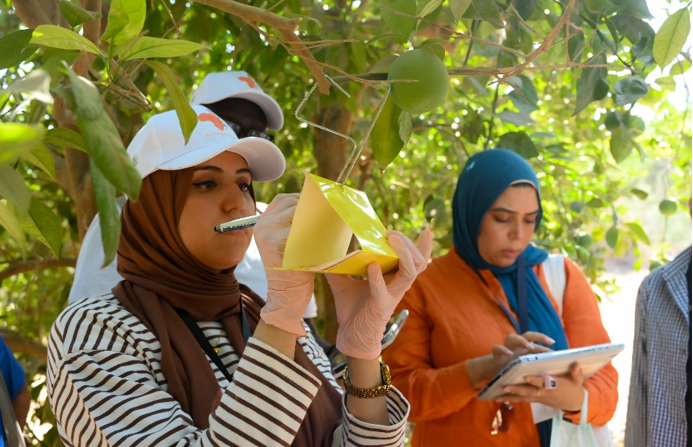
A phytosanitary officer in Egypt labels an insect trap. ©FAO Egypt
How do AU-IAPSC and NEPPO support the implementation of APP?
Saliou and Ben Jamma:AU-IAPSC and NEPPO play a key role in supporting countries to realize the full value of APP. As Africa's regional plant protection organizations, we coordinate and ensure the effective participation of national plant protection organizations (NPPOs) and support training.
We supported the selection and onboarding of participating countries. Regional consultations led to APP’s rollout in 20 countries so far. We guide the process and support where needed, despite limited resources. We have embraced APP as our own, especially after its endorsement by the former African Union Commissioner. However, we need additional resources for effective implementation, considering that countries have identified over 40 priority pests.
What are some of the marks of success so far?
Ben Jamma:APP’s success can be reflected in five key indicators: the launch and train-the-trainer workshops for phase one and two in 2023 and 2025; strong financial support from multiple donors; training of phytosanitary inspectors on the five major pests affecting Africa; and the provision of practical, effective digital tools that enhance pest surveillance across participating countries.
APP aims to support all African countries in enhancing their capacity to monitor and prevent pest spread using digital tools. How can this be sustainably achieved?
Ben Jamma:African countries with greater financial and technical capacity should take the lead in fully implementing the programme at the national level, demonstrating its value and setting a benchmark for others. The countries already on the programme should provide the minimum technical needs for trainers. At the same time, the IPPC Secretariat should provide targeted support to less developed countries to ensure effective implementation, strengthen regional alignment, and accelerate the programme’s overall impact.
Saliou:APP is well-positioned to achieve its goals, but to maximize its impact, we must invest in data collection and use, especially through pest surveillance activities, which are now enhanced through APP. This data will support the development of information and risk maps, giving African countries a collective understanding of current and emerging threats and enhancing the efficacy of pest management action.
Secondly, engaging the private sector is critical to expand access to innovative technologies, smart pest management tools, essential field supplies and greater penetration of the African market. Public-private partnerships or forums- convening innovators, regulators, farmers, donors, importers, exporters and policymakers- are key.
Finally, sustaining APP will also require stronger advocacy and member-state buy-in, including financial and in-kind contributions such as experts, laboratories and training facilities.
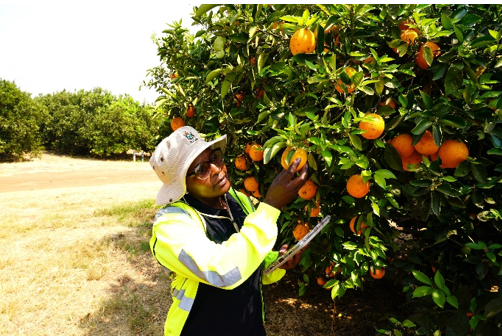
A plant health officer inspects citrus for False Codling Moth, using APP tools to record field data. ©FAO/Kevin Mazorodze
How would you advise countries to ensure effective implementation of positive phytosanitary and trade outcomes?
Ben Jamaa and Saliou:Essentially, all African countries are part of APP, and I encourage them to actively use the pest survey guides and protocols developed under the programme to strengthen their capacity. Participating countries should not focus solely on their own phytosanitary systems but also serve as models for neighbouring countries, since pests don't need passports to cross borders. We see a lot of enthusiastic communication from participating countries- in meetings, on social media and other platforms. This reflects ownership at the country level. Countries should also contribute to the APP multi-donor trust fund set up by the IPPC Secretariat.
Knowledge sharing is also critical, and we encourage all African countries to participate in the APP side session during the upcoming 20th session of the Commission on Phytosanitary Measures (CPM-20) in March this year. This will be a good opportunity for countries to exchange information on lessons learned, successes and challenges and perspectives for the future of APP in Africa and as a global phytosanitary programme.
Additional information:
Subscribe
Subscribe to the IPPC Newsletter
النشرة الإخبارية للاتفاقية الدولية لوقاية النباتات
اشترك لتلقي آخر news from the IPPC in your inbox.
Subscribe